This page describes the house rules for the game, as well as canonical information that may be useful to the players.
Overview
Welcome to the Vast!

Era
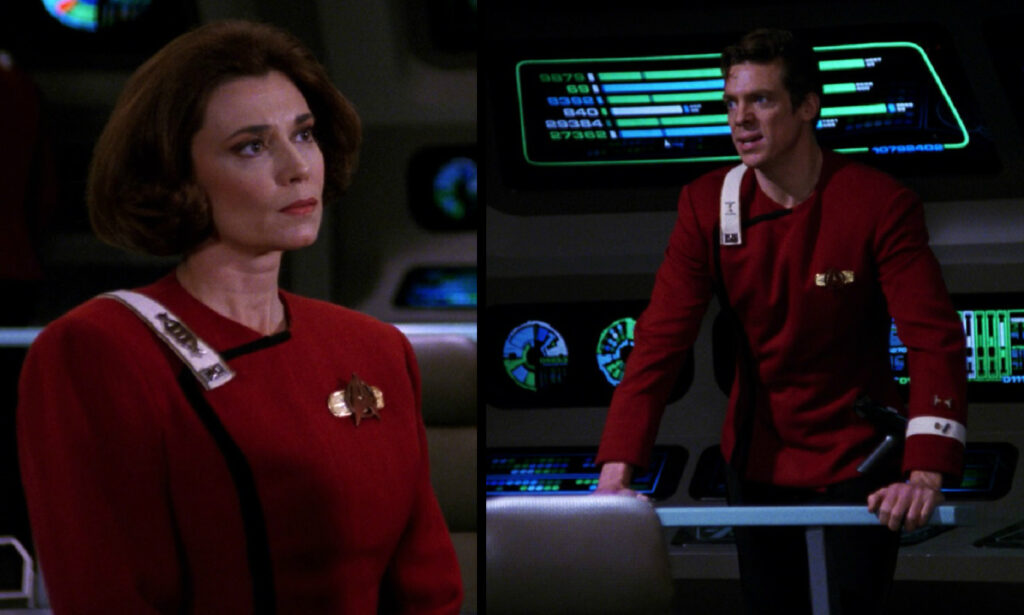
The year is 2331, a period where Captain Jean-Luc Picard has just taken command of the USS Stargazer, and Starfleet is transitioning from the era of Star Trek: The Original Series to Star Trek: The Next Generation. The iconic Ambassador class vessels, such as the Enterprise-C, are brand new. The Federation is entering a time of relative strength and stability, having no recent wars and no major external threats on the horizon. Klingon relations are tense but stable, the Romulans have mysteriously retreated into their borders for the last 40 years, and factions like the Cardassians, Ferengi, and Bajorans remain unintroduced in this part of the galaxy.
Setting
The crew is stationed on a deep-space outpost called tihoS pagh’lan (Klingon for “Almost Nowhere”) Station, a facility located beyond the rimward edge of Federation space, near the borders of Klingon and Gorn territory. This system lies on the fringe of an uncharted and dangerous region known as “the Vast”—a massive stretch of space where subspace is broken, preventing faster-than-light communication, sensors, or travel. This anomaly has made the region a mystery and an ideal location for adventurers, treasure hunters, and outcasts.
The Vast and the Rish-Natal Combine
On the other side of the Vast lies the enigmatic Rish-Natal Combine, a technologically advanced civilization that encountered the Klingons 140 years ago and easily defeated them. Though the Rish-Natal have retreated behind the Vast, they left behind a series of abandoned outposts on the coreward side, with one crucial condition: any occupying power must adhere to a strict non-interference policy akin to Starfleet’s Prime Directive, specifically regarding pre-warp civilizations.
Many of the stations have been getting picked apart for scrap metal since, but the tihoS pagh’lan system had something special. An enormous asteroid field chock full of rare materials like dilithium encircles it beyond its most distant world from the local star. Everybody wanted that station because of the vast wealth involved. The only other thing of interest in the system is a proto-Vulcanoid primitive culture on the second planet.
The Gold Rush and Current Tensions
The Rish-Natal allowed the Federation, Klingon Empire, and Gorn Hegemony to renovate one of the abandoned outposts in the tihoS pagh’lan system. The station’s proximity to a huge asteroid field rich in dilithium and other valuable resources triggered a rush to claim its wealth. The three governments agreed on a cooperative treaty, sharing responsibilities and mining rights in the system. However, by 2312, the easy mining was done, and the system degenerated into a lawless, dangerous place where desperate factions vie for control of dwindling resources. The Klingons and Federation now consider it a punishment detail, while the Gorn continue to cling to the remnants of the once-thriving mining operation, primarily reduced to waste-hauling duties.
Adventure and Mystery
Beyond the asteroid field lies the untouched expanse of the Vast, a region of unknown phenomena and hidden dangers. Characters stationed at tihoS pagh’lan must navigate treacherous politics, fading resources, and the mysterious pull of the Vast. Explorers risk everything in this isolated outpost to unravel the scientific mysteries that lie within, seeking fame, fortune, or redemption in one of the most forsaken regions of the galaxy.
Will you restore order to this crumbling outpost, venture into the unknown reaches of the Vast, or exploit the station’s chaos for your own ends? In Star Trek: The Vast, the galaxy’s final frontier is darker and more dangerous than ever.
Law
With three governments operating in one location, law is an important factor in the game.
The Vast Pact
The Vast Pact of 2298, drilled down to its basics, says this:
- The Federation, Klingons, and Gorn would share the cost of renovating and maintaining the station.
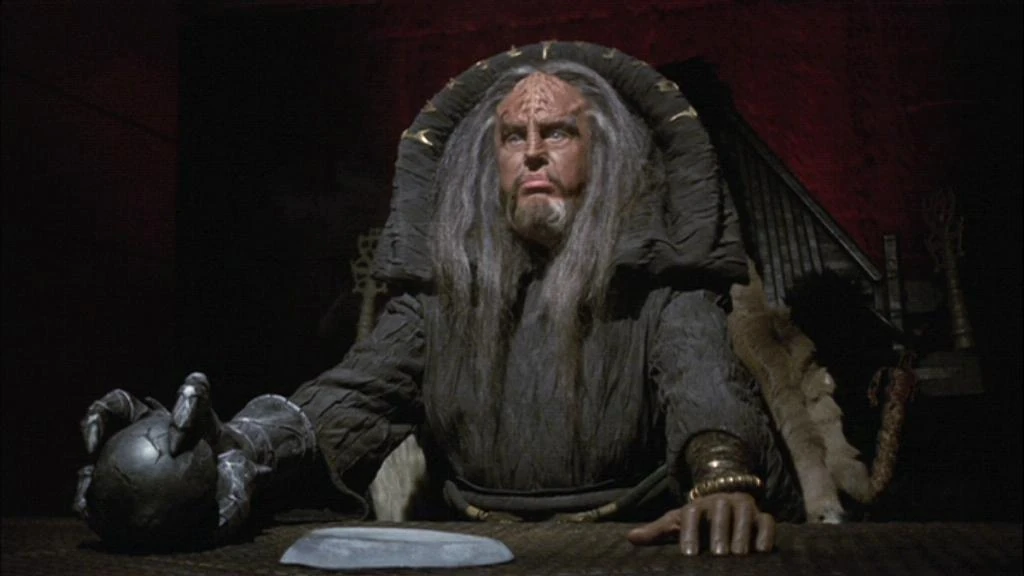
- Starfleet and the Imperial Klingon Defense Forces would run the station in alternating intervals of five years. During those times, the predominant law of the culture managing the station would be applied to the crew of the station. Intragalatic law would be applied to the station’s civilian population.
- The group not managing the station would be obliged to patrol the system, assist the commercial operators if they were in jeopardy, and defend the station.
- The Gorn were given prime mining rights and a substantial ongoing sum to remove and handle waste from the station.
- Any government could explore the Vast, so long as they adhered to the non-interference policy.
- All groups would unite against any common threat to the station.
Psionics
Intragalactic law agrees with the three major powers on the topic of psionics in almost every way. These are summarized as follows:
- Sense: Psionic abilities like empathy and telepathy are a sense, like any other, and are treated as such under the law.
- Casual Use: As such, casual use of these senses to pick up surface thoughts and emotions is allowable.
- Intrusive Use: Intrusive use of psionic senses is considered assault. For example, deep telepathic probes of non-consenting parties is a serious crime.
- Evidenciary: Information derived from psionics is not introducable in a court of law.

Rules of Engagement
Worf: When the ship decloaked, I should have checked the target before I fired.
Sisko: You’re damned right you should’ve checked. You knew there were civilian ships in the area. You fired at something you hadn’t identified. You made a military decision to protect your ship and crew, but you’re a Starfleet officer, Worf. We don’t put civilians at risk or even potentially at risk to save ourselves. Sometimes that means we lose the battle and sometimes our lives. But if you can’t make that choice, then you can’t wear that uniform.Star Trek: Deep Space Nine – “Rules of Engagement”
Starfleet is a paramilitary, rather than a military, organization. Their primary purpose is exploration. Unlike the Klingons, they have strict rules about engaging the enemy.
Here are Starfleet’s rules of engagement:
Rule 1: Avoid Conflict if Possible
Starfleet’s primary mission is exploration, diplomacy, and defense. Whenever possible, officers must attempt to resolve conflicts peacefully through diplomacy or negotiation before engaging in hostilities.
Rule 2: Do Not Fire Unless Fired Upon
Starfleet vessels may not initiate combat unless they are fired upon or there is clear evidence of an imminent attack. Defensive actions are permissible if an enemy is preparing to attack or threatens the safety of the crew, ship, or civilians.
Rule 3: Minimize Casualties
When engaging in combat, the goal is to incapacitate or disable hostile forces with minimal loss of life on both sides. Destruction should only be a last resort, and officers must make every effort to avoid civilian casualties.
Rule 4: Protect Civilian Life
Under no circumstances may Starfleet officers target civilians or civilian structures. Protection of civilian populations is paramount, even in the midst of a conflict.
Rule 5: Use Proportional Force
The force used in a conflict must be proportional to the threat encountered. Excessive force, especially when dealing with weaker or technologically inferior enemies, is prohibited. Officers must act with restraint.
Rule 6: Respect the Sovereignty of Neutral and Allied Powers
Starfleet officers may not violate the territorial sovereignty of neutral or allied powers. Entering the territory of another government or engaging in hostile actions within their borders without explicit authorization is a serious breach of protocol.
Rule 7: Follow the Prime Directive
No action may be taken that would interfere with the natural development of a pre-warp civilization, even in the context of a conflict. This includes avoiding the use of advanced technology in a way that could affect the development of such societies.
Rule 8: Seek Authorization for Preemptive Strikes
Preemptive strikes may only be authorized in cases where there is undeniable evidence of an imminent and unavoidable attack. Such actions typically require approval from Starfleet Command or a senior officer in extreme situations.
Rule 9: Detain Rather than Destroy
Capturing hostile forces, when feasible, is preferred over destroying them. Prisoners of war or detained enemies are to be treated in accordance with Starfleet’s ethical standards, including humane treatment and due process.
Rule 10: Cease Fire if Surrender is Offered
Hostilities must immediately cease if an opponent offers a surrender. Officers must accept surrender and treat surrendered forces with respect, following established procedures for detaining and processing prisoners.
Rule 11: Avoid Retaliatory Strikes
Starfleet officers are discouraged from engaging in actions that are purely retaliatory. The goal is to end hostilities, not escalate them. Revenge or punitive strikes are prohibited unless they are necessary to end an immediate threat.
Rule 12: Protect Medical Personnel and Ships
Starfleet vessels and officers must respect the sanctity of medical ships, personnel, and facilities. Engaging in hostilities against medical units, even if under enemy control, is forbidden unless those units are actively participating in combat.
Rule 13: Self-Defense is Paramount
While the above rules prioritize diplomacy and restraint, Starfleet officers are always authorized to defend themselves, their ships, and their crews from attack. If peaceful resolutions fail, officers must protect Federation citizens and property.
Rule 14: Comply with Federation Law
All actions taken during a conflict must be in compliance with the laws of the United Federation of Planets. Starfleet officers are subject to the legal oversight of the Federation and must follow legal protocols in times of war or peace.
Rule 15: Report All Violations
Any violation of these rules must be reported to a superior officer or Starfleet Command immediately. Failure to report a breach of the ROE is considered a serious infraction.
The Crew
You are Starfleet’s rejects. Characters are here as their last chance before they get drummed out of Starfleet or assigned forever to Outpost Shithole. If they make it through the ship’s five year mission without screwing up, they have a chance in Starfleet.
They generally have one of four reasons to be there:
Screwed Up: The character did something horribly stupid, and it derailed their career. Maybe it was a one-off, maybe it wasn’t.
Dark Secret Discovered: Maybe the character is half-Romulan. Or a genetic augment. Or they did something they can’t quite be arrested for, but that is very naughty, indeed.
Lazy/Incompetent/Weirdo: Basically, this character just sucks at Starfleeting, either because they’re just really bad at their job, or they don’t care to do it, or they’re so socially odd that they don’t play well with others.
Volunteered: The least likely option is they volunteered for this mission, which in and of itself makes them appear suspicious to Starfleet. Maybe they want to explore a given mystery or have a personal issue to resolve or just want to help somebody else on the ship.
In the first three cases, there’s one of three reasons Starfleet didn’t just eject them:
Heroic: Maybe they were so heroic that their flaw is overlooked and the Admiralty thinks they might be an asset to the fleet. “Yes, you saved the President’s life, but in doing so, you disclosed that you had undisclosed genetic modifications.” Or “Yes, you saved a ship full of people, but you crash-landed on a forbidden planet, so we need to put you aside for a while until the heat dies down.”
Somebody Pulled Some Strings: Maybe your parent is an Admiral, or your former captain really pulled for you, or you come from the ruling dynasty of some world. In any event, somebody has protected you from the consequences of your situation.
You Show Potential: All your scores are high. Your psych profile says you’re stable. Why are you such a screw-up? Starfleet doesn’t know, but you’ve got potential, and they don’t want to see it wasted. This is your last chance to live up to it.
Each player character’s backstory should explain what they did to get this detail.
Character Creation
There are several modifications from the regular Star Trek Adventures rules in regards to character creation and advancement. Please reference page 97 of the Star Trek Adventures 2nd Edition Core Rulebook for the Lifepath Summary.
Reputation
All player characters start with a Reputation of 2. Traits and Career Events may modify this.
If a character starts with a Reputation of 0, they have basic security clearance, and are being watched constantly for the slightest infraction. If a character’s Reputation falls from 1 to 0, it is safe to assume they will be arrested or at least removed from the mission.
Troupe Roleplay
Everybody except the Captain’s player makes three characters, because we don’t want players sitting bored, and not every bridge officer is involved in every scene. This way, you’ll always have someone to play.
Ship Role
Each character on the mission has a job, a role they play on the ship. You must define this role for each character.
Bridge Roles
There are several main roles that any of your characters may take, though obviously, as senior positions, it might be advisable to assign your Bridge Officer or Department Head to them.
These roles are: Commanding Officer, Executive Officer, Helm Officer, Operations Officer, Chief of Security, Tactical Officer, Communications Officer, Science Officer, Chief Engineer, and Chief Medical Officer. Ships of this era do not have Counselors on the bridge.
Non-Bridge Roles
Any other roles may be taken. Examples would include anything from Chief Astrometrics Officer to Maintenance Engineer.
Civilian Roles
Perhaps you want a character to be a civilian. Any character who chooses to be a civilian gains 1 extra Department and 1 extra Focus, since they have the negative aspect of being able to be ordered around by just about anybody on the ship, but have no authority themselves. Are you the ship’s bartender? A visiting scientist? A diplomat? The options are wide open.
Captain
The Captain’s player gets the Captain and a Crewman.
Attributes: The Captain has 50 points to spread among their Attributes at the beginning of character creation. No starting stat may be below 5, nor above 10.
Departments: The Captain starts with a rating of 1 in each Department, but may add 2 points to any one Department, or 1 each to any two Departments.
Career Events: See Career Events under House Rules, below, for special rules about Career Events. The Captain may choose up to five Career Events.

Bridge Officer
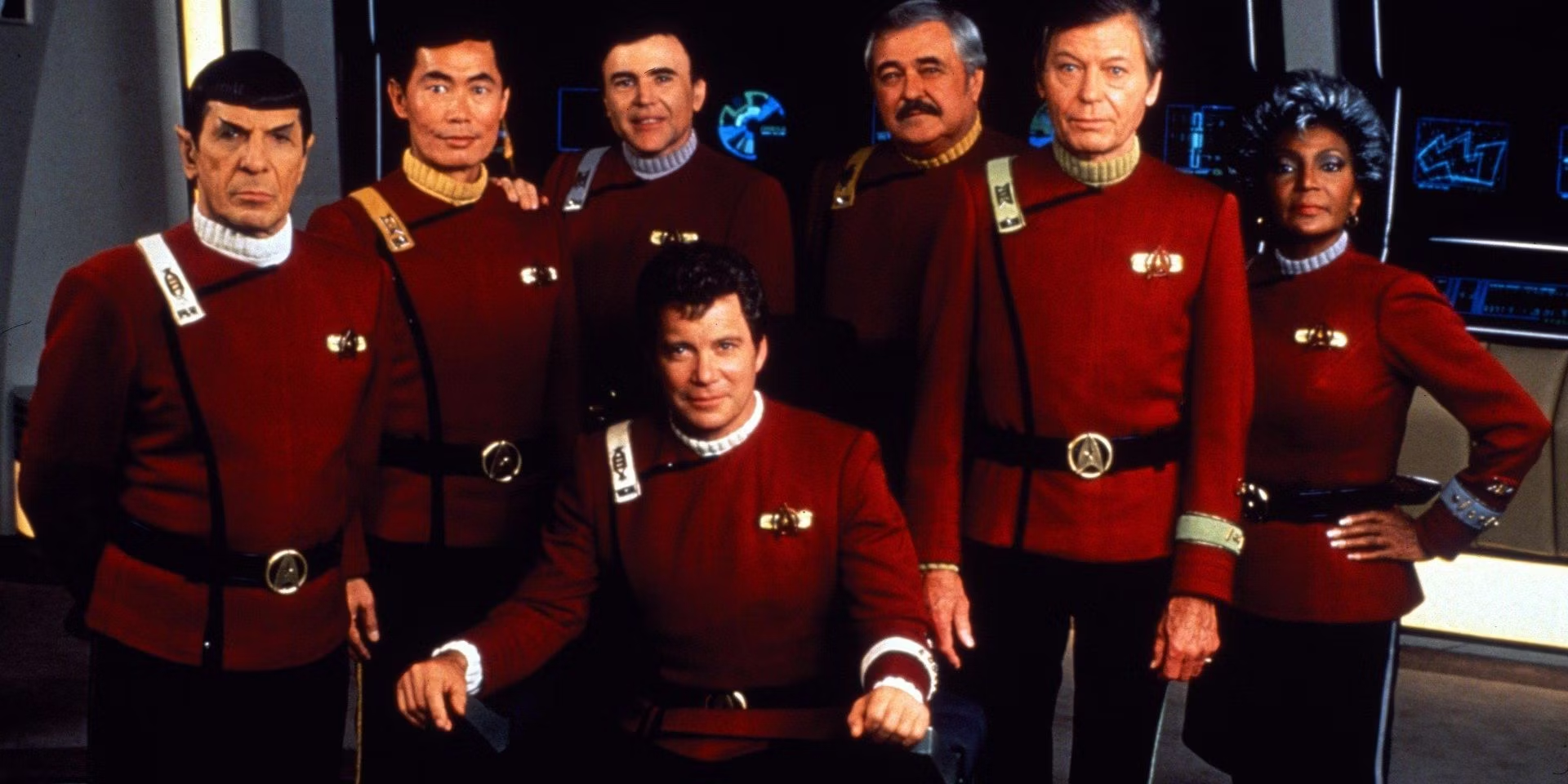
This is everybody else’s main character, the one who gets his name in the credits. They might not serve on the bridge all the time — like the Chief Medical Officer, for example, but they’re a main character. They get the most buff character stats.
Attributes: The Bridge Officer has 42 points to spread among their Attributes at the beginning of character creation. No starting stat may be below 5, nor above 10.
Departments: The Bridge Officer starts with a rating of 1 in each Department and add 1 to any Department.
Career Events: See Career Events under House Rules, below, for special rules about Career Events. The Bridge Officer may choose up to three Career Events.
Department Head
Not necessarily a department head, they could just be a lower-ranked badass, but somebody who is a serious player, if not a main character. The next most buff stats.
Attributes: The Department Head has 39 points to spread among their Attributes at the beginning of character creation. No starting stat may be below 5, nor above 10.
Departments: The Department Head starts with a rating of 1 in each Department.
Career Events: See Career Events under House Rules, below, for special rules about Career Events. The Department Head may choose up to two Career Events.

Crewman
Again, not necessarily an indication of rank, but skill. The least buff character. “Hello, I’m Ensign Joe Redshirt.”
Attributes: The Crewman has 35 points to spread among their Attributes at the beginning of character creation. No starting stat may be below 4, nor above 10.
Departments: The Crewman starts with a rating of 1 in each Department.
Career Events: See Career Events under House Rules, below, for special rules about Career Events. The Crewman may choose one Career Events.

House Rules
These are modifications and enhancements to the Star Trek Adventures 2nd Edition rules.
Canon
Due to the era of the game, some canonical guidelines are in place.
Please note that with sufficient justification, canonical rules can be bent, if not outright broken. For example, Worf is the first Klingon in Starfleet, right? But perhaps there was a surgically altered Klingon who passed as Human and “went native” while on an espionage mission. This would not break canon, especially if said Klingon was never discovered or Starfleet Intelligence covered it up for their own reasons.
The following sections discuss canonical rules.
Species
Disallowed Species
The following species have not yet entered canon: Aldeans, Ba’ku, Borg, Ferengi, any Delta quadrant race, Edo, Founders, any Gamma Quadrant race, Lysians, Satarrans, Vau N’Akat, Zalkonians
No non-corporeal species are allowed.
Questionable Species
These species may be allowed with a good backstory and GM’s permission.
Bajorans, Cardassians, Klingons, and Romulans are either enmeshed in their own affairs or hostile to the Federation or have prior canon stating some officer was the first of that species in Starfleet.
Characters from pre-warp civilizations would not normally be permitted in Starfleet due to the Prime Directive.
Characters from non-Federation species may be approved on a case-by-case basis.
New Species
Players are allowed and encouraged to invent new species. Please see the Custom Species for more details.
Connections to Canon
Your character should avoid having connections to existing canon. Please don’t make Captain Picard’s Academy bunkmate or Captain Kirk’s illegitimate grandchild. We don’t want Paramount yelling at us about copyright.
Career Events
In the standard rules, a character may have any number of Career Events, but they only the benefits of selecting two.
We’re ditching that rule. Instead, each type of character (Captain, Bridge Officer, etc.) gets a number of career events, with all the benefits stacking.
Characters may also make custom Career Events, each of which grants +1 to an Attribute, +1 to a Department, and a Focus.
Negative Career Events
Captain Katherine Janeway: “I reviewed your service record before meeting you, Mr. Paris. It seems you have a… talent for sticking your nose in where it doesn’t belong. You were an exemplary Starfleet officer until you were cashiered out for insubordination. After that, you joined the Maquis, got caught, and ended up in a Federation penal settlement.”
You may designate a career event as a negative career event. This represents a mission or event gone wrong.
The game impacts are as follows:
- In addition to the normal benefits, the character may choose a Talent associated with the event.
- However, the character’s Reputation goes down by 1.
Only one negative event may be chosen. If a negative career event is stacked, the character will not lose any more Reputation, but must subtract one points from an Attribute or Department.
Custom Career Events
Please note that you can create your own career event. The only requirements are these:
- It gives you 3 points to spend on either Attributes, Departments, Focuses, or Reputation.
- It may be a Negative Career Event.
Sample Custom Career Events: What’s a Nice Person Like You Doing in A Place Like This?
Unlike the rest of the crew, you’re actually well-regarded. Everybody is baffled that you’ve volunteered for this mission. If you weren’t so skilled in your field, you probably would’ve been turned down, but your organization is loathe to waste your talents.
Reputation: +2
Focus: Choose a focus related to your area of speciality.
Sample Custom Negative Career Event: Dark Secret Revealed
Your character was hiding something. Perhaps they lied about their parentage, due to an ancestor being allied with an enemy power. Perhaps they’re an Augment. Perhaps they were involved in something heinous and covered it up. Regardless, the truth has come to light.
Attribute: +1 Control
Department: +1 Security
Focus Suggestion: Deception
Talent: Choose a talent related to your Dark Secret.
Reputation: -1
Custom Species
Note: Please submit your application for the species prior to completing your entire sheet if you intend to invent a new species.
When creating a new species, include the following in your application.
Appearance: Describe their physical appearance or provide artwork.
Overview: Where are they from? How did they evolve? What is their civilization like? When did they join the Federation?
Sample Values: Make up four sample Values to help define the culture.
Attributes: Select +1 in any three Attributes.
Trait (Species Name): Provide us with a description of your species’ special nature, for both positive and negative. Use the existing species as guidelines.
Species Ability: Give the species an identifiable and iconic species ability that they all have.
Naming: Provide some sample names by gender, surname, etc.
Talents: If species members can evince advanced abilities on a case-by-case basis related to their heritage, list them here.
Custom Species: Drakkarians

Overview: Drakkari II is a warm, humid world where the felinoid Drakkarians evolved as the apex predator. Nocturnal by nature, the Drakkari developed warp technology relatively early in their historical cycle, due to a revered genius, Roatan Temeril. They joined the Federation in 2320, making the small crop of Drakkarians in Starfleet the first generation of their people in the service.
Drakkarians are hunters by nature and culture. They don’t solve problems, they pursue them. They are often quick to anger and quick to forgive, with a mercurial temperament. Their culture has never developed broad agriculture, instead using controlled burns and extensive foraging on their lush world. As such, they are a polyamorous society, often having multiple mates in a stable family model.
Due to their hard-soled feet, Starfleet generally grants them an exemption from the uniform code and allows them to go barefoot.
Drakkarians are generally outgoing, friendly, and competitive. When threatened, many revert to the silent and stalking nature of their ancestors.
Samples Values:
- I will hunt this problem until I have captured the solution.
- I loathe brightness and prefer to lurk in the shadows, literally or figuratively.
- Curiousity is the highest virtue.
- Everyone I meet is either an ally…or prey.
Attributes: +1 Daring, +1 Fitness, +1 Insight
Trait: Drakkarian. Drakkarians have excellent night vision, but are easily blinded by bright light. They have a light fur covering which insulates them from heat and protects them from light cold. They have elastic tendons in their lower legs and are capable leaping up to 2 meters per point of Fitness they possess.
Stealthy (Species Ability). When barefoot, they may re-roll 1d20 on any attempt to hide or move without being noticed.
Naming:
- Feminine: Lora, Aneri, Rota, Meori, Undara
- Male: Roatan, Dragaram, Eramal, Taran
- Surnames: Geterin, Metoral, Lirra, Nerimar, Oratalan
Hunter (Drakkarian Talent). You were raised in the traditional way, and are a superb hunter. When making any check related to tracking or survival, you may re-roll 1d20.
Custom Species: Phelobians

Overview: Phelob is a paradise, blessed with temperate weather, geostability, and very few natural predators. The dominant species, the Phelobians, are an immensely peaceful people wholly dedicated to a concept that translates into Federation Standard as “chill.” It is virtually impossible to upset a Phelobian and they are highly resistant to any attempts to upset or intimidate them.
Phelobians generally live a lifestyle of leisure and relaxation, almost but not quite to the point of being lazy. Under stress, Phelobians will often do what they call “getting it together,” and demonstrate brief bursts of extraordinary competence.
Samples Values:
- I will always be chill.
- Everybody just needs to chill.
- The maintenance of chill is, like, my job, dude.
- I need to make people understand that being chill is, like, a full-time job.
Attributes: +1 Presence, +1 Daring, +1 Insight
Trait: Phelobian. Phelobians are biologically almost identical to Humans. A few things set them apart, though. Phelobians are so relaxed that they are almost impossible to upset or intimidate. However, to maintain their chill, they return home every 5.17 Federation Standard Years in order to cleanse themselves of the negative vibes of the galaxy. They also have an increased immunity to any toxin that would impact their cognitive function. Overindulgence in a toxin will cause their body to reject via mild hemorrhaging, often from the eyes, ears, nose, and mouth after suffering a minor seizure.
Get It Together (Species Ability). Phelobians are capable of marshalling their will and enhancing their synaptic connections, functionally increasing their ability to do…well…just about anything. Phelobians who get it together gain an extra die on all rolls for the duration, up to a maximum of one hour. For every 1 minute they get it together, they gain a Trait of “Exhausted and Irritable” for an hour. They have disrupted their chill.
Naming:
- Feminine: Buphee, Sheelah, Gayuh
- Male: Tihm, Marhk, Dacoata, Dayv
- Surnames: Theleberian, Gohnad, Pothed
Maximum Chill (Phelobian Talent). You have achieved maximum chill and are essentially unflappable. This counts as a positive Trait in any high stress situation and as a negative Trait for anyone trying to intimidate or upset you.
Talents and Traits
All Talents and Traits from the first edition translate to the second edition. Anything in any of the first edition books may be used.
Custom Talents
You may make any new Talent with GM’s permission. Generally speaking, if a Talent has a requirement, then it is a more impactful Talent.
Custom Traits
You may create new Traits. Traits are relatively open-ended, but try to be reasonable in their design, using the existing Traits as guidelines. Traits are generally associated with species and occupation, so keep that in mind.
Advancements
The rules for Advancements are slightly different.
Adjustments
Adjustments are handled just as in the core rulebook, and may be applied to any, some, or all of your three characters.
Milestones
Only one of your characters may reach a Milestone in any given mission.
Character Arcs
Only one of your characters may reach an arc in any given session.
Reputation
Reputation is not automatically checked at the end of a mission. Rather, it is impacted by two things:
- Milestones: Whenever a character reaches a Milestone, they may make a Reputation roll.
- Disaster: If a character has a disastrous event, either through failing or malice, the GM may call for a Reputation roll.